Grooming
Grooming is often used as a way to carry out criminal or sexual exploitation.
Grooming is a process that involves manipulating, pressuring, or deceiving an individual or group. For example, a child or vulnerable adult can be groomed into committing criminal activity for someone else’s benefit.
Grooming can happen online or in person, and children and young people can be groomed by a stranger or a person they know.
The person may offer attention, gifts, money, drugs, alcohol, or affection to gain trust. They may pretend to be a friend or romantic partner. Over time, they may isolate the individual from family and friends, create a sense of secrecy, or use threats, pressure, or intimidation to maintain control.
It can be difficult to recognise, as it may appear to be a normal relationship at first. If you are worried that someone is being groomed, it is important to seek advice and report your concerns so that support can be put in place.
Signs to look out for
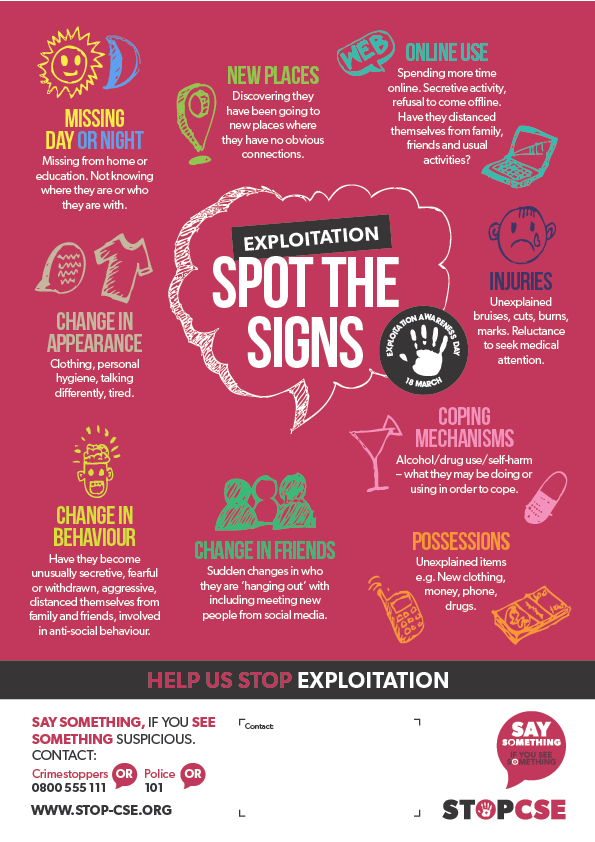
There are many signs that can indicate a child or young person may be groomed. This includes:
Spending more or less time online
Receiving unexplained gifts
Misusing alcohol/drugs
Being upset or withdrawn
Child Sexual Exploitation
Child Sexual Exploitation (CSE) is a form of child abuse.
It occurs where anyone under the age of 18 is persuaded, coerced or forced into sexual activity in exchange for, amongst other things, money, drugs/alcohol, gifts, affection or status.
Consent is irrelevant, even where a child may believe they are voluntarily engaging in sexual activity with the person who is exploiting them. CSE does not always involve physical contact and may occur online.
Children do not make informed choices to enter or remain in sexual exploitation, but do so from coercion, enticement, manipulation or desperation.
Any child or young person may be at risk of sexual exploitation, regardless of their family background or other circumstances.
Some children are particularly vulnerable, for example, children with special needs, those in residential or foster care, care leavers, migrant children, unaccompanied asylum seeking children, victims of forced marriage and those involved in gangs.
Sexual exploitation is never the fault of the victim.
Child Criminal Exploitation
Child Criminal Exploitation is when an individual or group manipulates, pressures, or deceives a child or vulnerable adult into committing criminal activity for someone else’s benefit.
This can include being forced or coerced to carry drugs or weapons, shoplift, move money, or take part in other illegal activities. Exploitation often involves grooming, threats, violence, or promises of money, status, or protection.
Criminal exploitation is a form of abuse. It can happen to anyone, but some people are more vulnerable, including children and young people who are experiencing difficulties at home, are not attending school regularly, are in care or leaving care, have experienced trauma, neglect or abuse, are affected by poverty, or have additional needs or disabilities. Those who feel isolated, excluded, or in need of belonging or financial support may also be at increased risk.
Our aim is to identify victims of exploitation as early as possible and provide coordinated support. We work in partnership with other agencies to share information, assess risk, and safeguard children and vulnerable adults. This includes multi-agency working, contextual safeguarding support for young people and their families, referrals to the National Referral Mechanism (NRM) where appropriate, safety planning, and providing education and prevention work to reduce risk and build resilience.
Slough Safeguarding Children and Young Adults from Exploitation Strategy 2026-27